

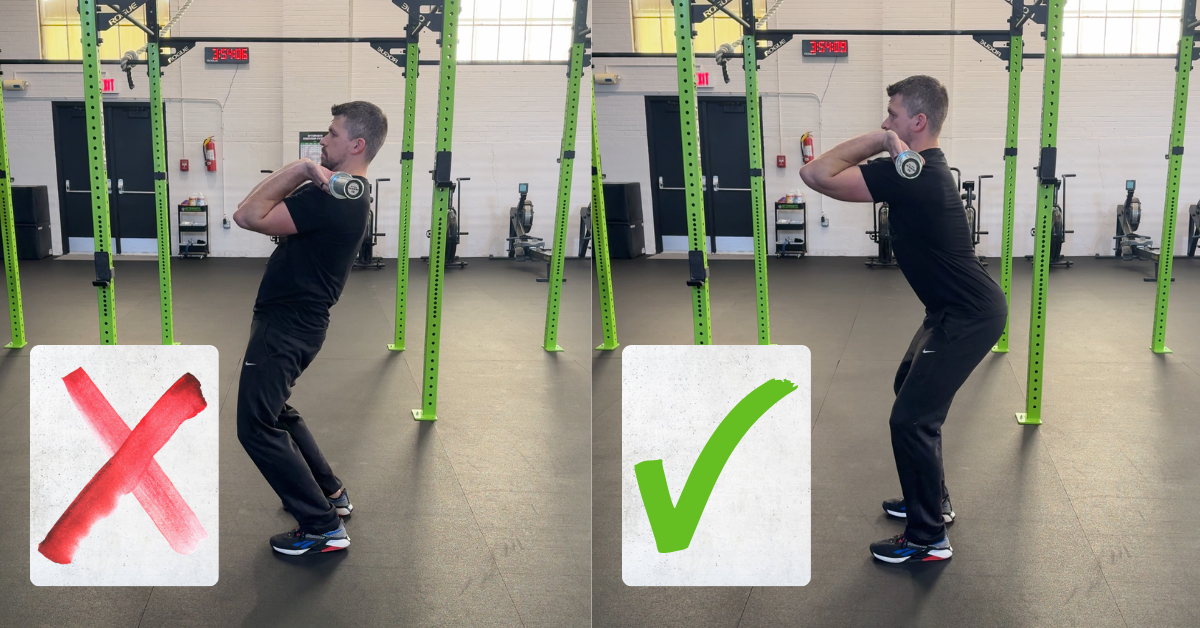
The ‘Muted Hip’ Problem (And Why Your Glutes Aren’t Doing Their Job)
There’s a good chance your glutes aren’t doing what they’re supposed to do.
Not because they’re weak. Not because you don’t train them. But because they’ve basically been… turned down.
This is what we call the “muted hip” problem.
And it shows up way more often than people think.
What is a “Muted Hip”?
Your glutes are meant to be one of the most powerful muscle groups in your body. They drive movements like squatting, deadlifting, jumping, running, and even just standing up out of a chair.
But when your hips are “muted,” your body stops relying on your glutes to do that work.
Instead, other muscles step in to compensate:
- Lower back
- Hip flexors
- Quads
- Hamstrings (doing more than their share)
Your body is always going to find a way to get the job done. The problem is how it gets done.
How It Shows Up
A muted hip doesn’t always feel obvious at first. It usually shows up in subtle ways:
- Squats feel all in your knees instead of your hips
- Your lower back gets tight or sore after workouts
- Deadlifts feel more like a back exercise than a full-body lift
- You struggle to hit depth or maintain balance
- One side feels stronger than the other
- You “feel” exercises everywhere except your glutes
Over time, these small issues can turn into bigger problems like:
- Knee pain
- Hip discomfort
- Lower back strain
- Plateaued progress in strength or conditioning
Why It Happens
There isn’t just one cause, but a few common ones show up again and again:
1. Too much sitting
When you sit for long periods, your hip flexors tighten and your glutes stay inactive. Over time, your body adapts to that position.
2. Poor movement patterns
If you’ve been squatting, lunging, or hinging with the wrong muscles for a while, your body builds that habit. Even when you try to “fix it,” it defaults back.
3. Lack of awareness
A lot of people simply don’t know what it feels like to actually use their glutes. If you can’t feel it, it’s hard to train it.
4. Mobility restrictions
Limited hip mobility can prevent your glutes from getting into a position where they can actually do their job.
Why It Matters
This isn’t just about getting a better pump or building stronger glutes.
Your hips are your foundation.
When they’re not doing their job:
- Your knees take on more stress
- Your lower back picks up the slack
- Your performance drops
- Your risk of injury goes up
Fixing your hips often fixes a lot of other issues at the same time.
How to Start Fixing It
The goal isn’t to just “train harder.” It’s to retrain how your body moves.
Here’s where to start:
1. Learn to feel your glutes
Before loading anything heavy, you need to reconnect with the muscle. Simple movements like:
- Glute bridges
- Banded walks
- Controlled step-ups
Slow them down. Focus on what you’re actually feeling.
2. Clean up your movement patterns
Squats and deadlifts are great… but only if they’re done well.
Focus on:
- Sitting back into your hips
- Keeping your weight balanced
- Controlling the descent
- Driving through your heels
Sometimes a small adjustment changes everything.
3. Address mobility where needed
If your hips or ankles are restricted, your body will find a workaround.
Spending a few minutes on:
- Hip flexor stretches
- Ankle mobility
- Soft tissue work
can make a big difference in how you move.
4. Be consistent, not aggressive
This isn’t something you fix in one workout.
It’s small reps done well, over time.
The good news is, once your body starts to relearn these patterns, everything else starts to feel better too.
What This Looks Like in Real Life
We see this all the time with members.
Someone comes in dealing with knee pain, back tightness, or frustration with their progress.
We don’t just throw more intensity at them.
We slow things down, clean up movement, and get the right muscles doing the work again.
And suddenly:
- Squats feel smoother
- Pain starts to go away
- Strength goes up
- Confidence builds
Not because they worked harder… but because they moved better.
Final Thought
If something feels off in your workouts, there’s usually a reason.
Your body isn’t broken. It just adapted.
The good news is, it can adapt back.

FIX WHAT’S HOLDING YOU BACK
If something in your workouts hasn’t felt right, it’s worth taking a closer look. Book a free No Sweat Intro and we’ll walk you through what’s going on and how to fix it.
Comments are closed