

*EDIT*
This article was originally published when we were using the name Aftermath Strength & Conditioning. We’ve been a CrossFit affiliate since opening, and have recently transitioned to using CrossFit Somonauk across everything we do.
How Much Cardio Do You Actually Need?
When most people think about getting in shape, they think about cardio.
Running. Biking. Ellipticals. Long workouts designed to burn as many calories as possible.
So it’s a common question:
How much cardio do you actually need?
The answer is less about doing more and more cardio, and more about doing the right kind of conditioning in the context of a balanced training program.
What Most People Get Wrong About Cardio
A lot of people fall into one of two extremes.
They either:
- Do long, slow cardio sessions several times per week
- Avoid cardio altogether and focus only on lifting
Both approaches miss the bigger picture.
Cardio is important. It improves your heart health, endurance, and ability to recover between efforts. But doing too much low-quality cardio can take away from strength development and even lead to burnout.
On the other hand, avoiding conditioning altogether limits your overall fitness.
The goal is balance.
Cardio Isn’t Just “Long, Slow Distance”
One of the biggest misconceptions is that cardio has to mean long, steady-state workouts.
In reality, conditioning can take many forms:
- Short, high-intensity intervals
- Moderate, sustained efforts
- Mixed modal workouts combining strength and cardio
- Bodyweight circuits
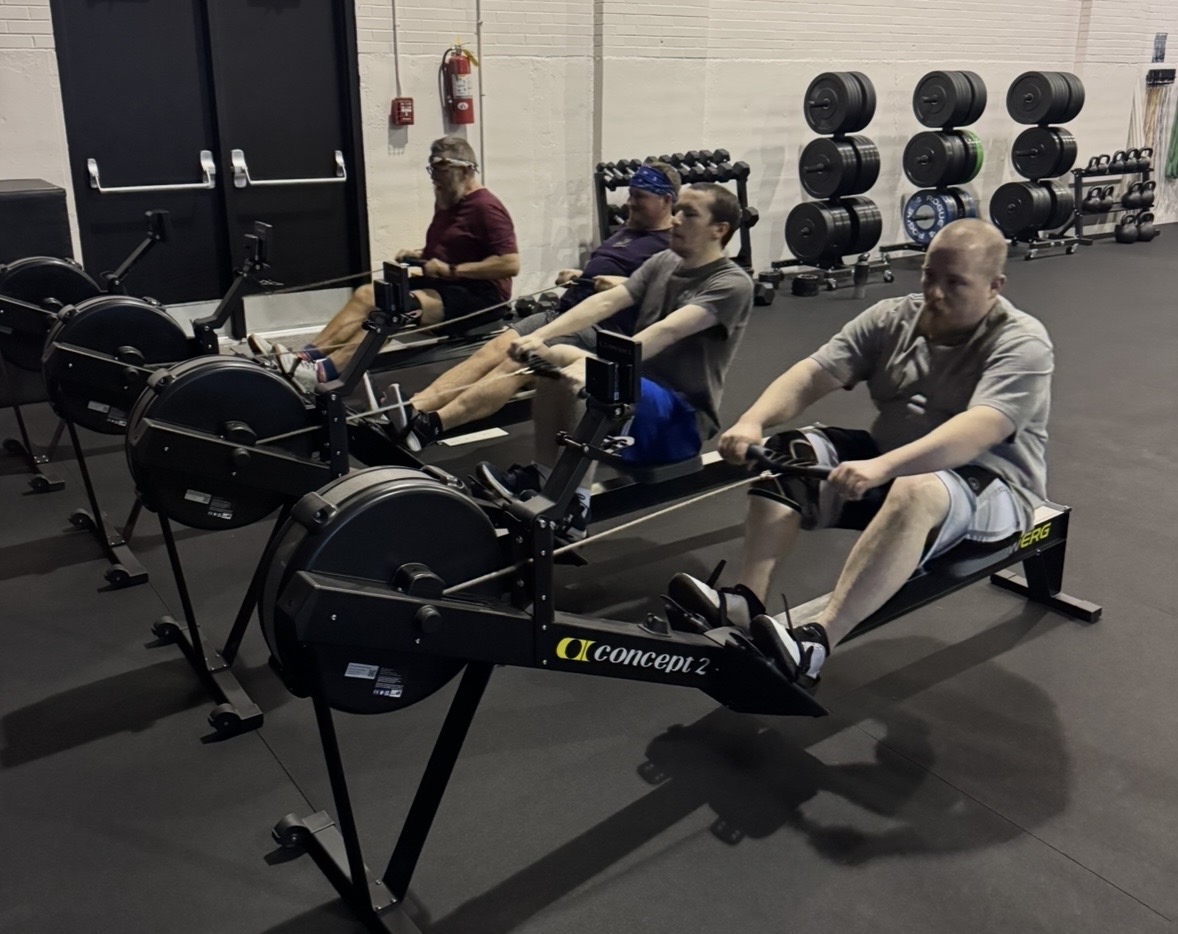
- Rowing, biking, or running intervals
This is where CrossFit takes a different approach.
Instead of separating strength and cardio into completely different days, CrossFit blends them together within a structured class.
How Cardio Fits Into a CrossFit Class
A typical CrossFit class includes:
- A warm-up
- A strength or skill portion
- A conditioning workout
- Mobility or cool-down
The conditioning portion is where cardio comes into play.
But instead of spending an hour on a treadmill, the conditioning is:
- Time-efficient
- Varied
- Combined with functional movements
You might see workouts that include:
- Rowing intervals mixed with wall balls
- Short runs paired with kettlebell swings
- Bike sprints combined with bodyweight movements
This approach trains your cardiovascular system while also developing strength and coordination.
Why You Don’t Need Endless Cardio
More cardio is not always better.
Long, repetitive cardio sessions can:
- Interfere with strength gains
- Increase wear and tear on joints
- Lead to mental burnout
- Take up more time than necessary
For most people, especially those balancing work, family, and other responsibilities, spending hours doing cardio isn’t realistic or necessary.
You can build excellent conditioning with shorter, more focused sessions.
Intensity Matters More Than Duration
When it comes to conditioning, intensity plays a major role.
Shorter, higher-intensity efforts can improve:
- Cardiovascular fitness
- Work capacity
- Recovery between efforts
This doesn’t mean every workout should be all-out, but it does mean that quality matters more than quantity.
A 10–15 minute conditioning workout done with purpose can be more effective than a long, slow session done without focus.
How Much Cardio Is Enough?
For most people, cardio does not need to be a separate, daily activity.
If you’re consistently attending CrossFit classes, you are already getting:
- Regular conditioning exposure
- A mix of time domains
- Varied movement patterns
- Opportunities to push intensity
That combination is enough to improve your cardiovascular fitness over time.
If someone enjoys additional cardio, such as running or biking outside of class, that can be a great supplement. But it should support your training, not replace it or interfere with recovery.
The Bigger Picture: Balanced Fitness
The goal of training is not just to improve one area of fitness.
It’s to develop:
- Strength
- Endurance
- Power
- Mobility
- Skill
Focusing only on cardio can leave gaps in your fitness.
CrossFit’s approach is to build well-rounded capacity so you are prepared for a wide range of physical challenges.
That’s why conditioning is just one part of a complete training session.
The Bottom Line
You don’t need endless hours of cardio to get in shape.
What you need is the right amount of conditioning within a balanced training program.
Short, structured, and varied conditioning workouts can improve your cardiovascular fitness while still allowing you to build strength and move well.
If your training includes a mix of strength, skill work, and conditioning, you are already doing what most people are missing.
More cardio isn’t always the answer.
Better training is.

TRAIN SMARTER, NOT LONGER
You don’t need hours of cardio to improve your fitness. With the right mix of strength, conditioning, and coaching, you can get better results in less time. Schedule a No Sweat Intro and we’ll help you find the right approach for your goals, whether that’s CrossFit, Afterburn, or personal training.
Comments are closed