

*EDIT*
This article was originally published when we were using the name Aftermath Strength & Conditioning. We’ve been a CrossFit affiliate since opening, and have recently transitioned to using CrossFit Somonauk across everything we do.
Why Coaching Matters More Than the Workout Itself
When people first hear about CrossFit, they often focus on the workouts.
They see the whiteboard filled with exercises, the barbells, the pull-up rig, and the intensity of the training. It’s easy to assume that the workout itself is the most important part.
But in reality, the workout is only part of the equation.
The real value of a great training environment isn’t just the programming. It’s the coaching behind it.
A well-designed workout matters, but without guidance, feedback, and instruction, even the best workout plan can fall short.
Workouts Are Everywhere
Today, you can find workouts almost anywhere.
There are thousands of free workouts online, fitness apps that generate routines automatically, and social media accounts posting daily training ideas.
You can walk into a traditional gym, find a program online, and follow it on your own.
But having access to a workout isn’t the same as having coaching.
Without a coach, most people are left guessing about:
- Whether their technique is correct
- How hard they should be pushing
- When to scale or modify movements
- How to progress safely over time
That’s where coaching makes the difference.
Coaching Improves Technique
One of the biggest benefits of coaching is learning how to move well.
Many exercises used in strength and conditioning—like squats, deadlifts, presses, and Olympic lifts—require proper mechanics to be performed safely and effectively.
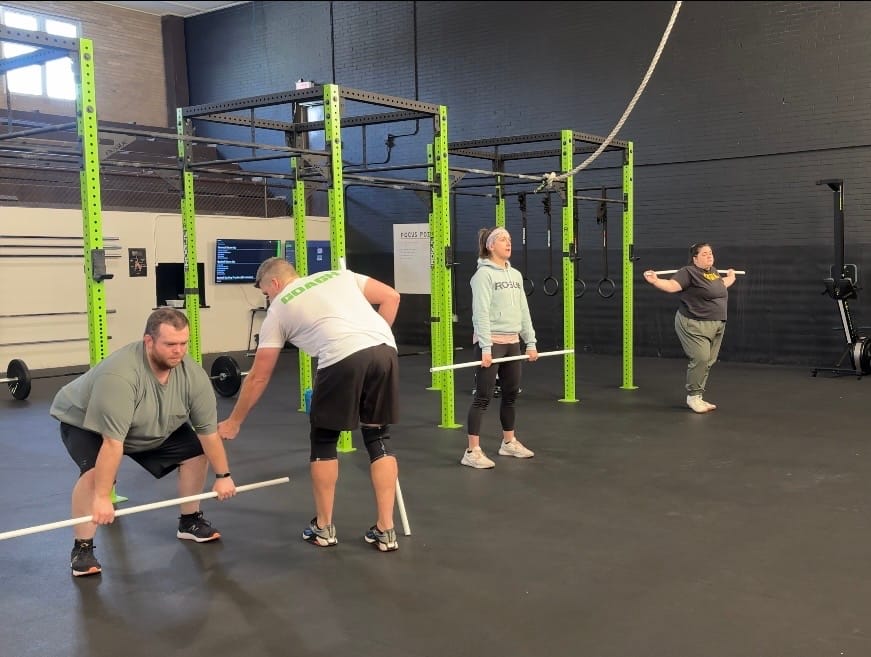
A good coach watches movement closely and helps athletes improve their technique through small adjustments.
Sometimes that means:
- Adjusting foot position
- Changing the load being used
- Modifying the movement temporarily
- Offering cues that improve efficiency
These details may seem small, but over time they make a huge difference in both safety and performance.
Coaching Helps You Train at the Right Intensity
Another challenge people face when training on their own is knowing how hard to push.
Some people push too hard and burn out quickly. Others hold back and never reach the intensity needed to improve.
A coach helps guide athletes toward the right balance.
They can recognize when someone should:
- Increase the challenge
- Scale a movement
- Slow down and focus on technique
- Push through discomfort in a safe way
That guidance helps athletes train more effectively and avoid the common cycle of overdoing it one week and skipping workouts the next.
Coaching Creates Accountability
Consistency is one of the biggest predictors of fitness progress.
But staying consistent can be difficult when you’re training alone.
When you have a coach and a class environment, there’s built-in accountability.
Your coach knows when you show up. They also notice when you don’t.
That accountability, combined with the support of other members, makes it much easier to stay committed to your training over the long term.
Coaching Builds Confidence
For many people, starting a fitness program can feel intimidating.
Learning new movements, lifting weights, or trying unfamiliar workouts can make people unsure of themselves.
Coaching helps remove that uncertainty.
When a coach explains movements clearly and offers feedback during workouts, athletes start to build confidence in their abilities.
Over time, things that once seemed difficult or intimidating begin to feel normal.
That confidence often extends beyond the gym into other areas of life as well.
Coaching Adapts the Workout to the Athlete
No two athletes are exactly the same.
People come into the gym with different backgrounds, goals, injuries, and fitness levels.
A good coach understands this and adjusts workouts accordingly.
In a well-coached environment, movements can be scaled to match each person’s ability.
For example:
- A beginner may use lighter weights or modified movements
- Someone recovering from an injury might use alternative exercises
- An experienced athlete may increase the challenge
This flexibility allows everyone to train together while still working at an appropriate level.
Coaching Turns Exercise Into Training
There’s a difference between exercising and training.
Exercise is simply moving your body. Training is following a structured path toward improvement.
Coaches help turn workouts into training by providing structure, progression, and purpose.
They help athletes:
- Track progress
- Develop skills
- Improve strength and conditioning over time
Without that guidance, many people end up repeating the same workouts without seeing meaningful improvement.
The Bottom Line
Workouts are easy to find.
But effective coaching is much harder to replace.
A good coach helps athletes move better, train at the right intensity, stay consistent, and build confidence over time.
At the end of the day, the workout is just the tool.
Coaching is what helps people use that tool effectively to build strength, improve fitness, and create lasting progress.

EXPERIENCE COACHING FOR YOURSELF
The best way to understand the difference coaching makes is to experience it firsthand. Schedule a free No Sweat Intro and we’ll talk about your goals and the best path forward.
Comments are closed